The first cold night of the season is the worst time to find out your oil furnace has a problem. Most oil furnaces give plenty of warning before they quit: a new noise, a room that never quite warms up, a burner that will not stay lit, or a tank that empties faster than it used to. Knowing the signs your oil furnace needs repair lets you schedule service on your own timeline instead of waiting for a no-heat call in January.
Homeowners around Boyertown, Gilbertsville and Pottstown run into the same handful of warning signs, and most of them can be spotted, and a few safely checked, before you ever pick up the phone.
Why Oil Furnace Maintenance Matters Before Winter
Oil burns less cleanly than natural gas. Over a heating season, soot builds up on the burner, the nozzle and the heat exchanger. That layer of soot acts like insulation, so more of the heat you paid for goes up the chimney instead of into your home. A thin coating can raise fuel use noticeably, and a heavy one can lead to a puffback or a burner that shuts itself off.
Regular oil furnace maintenance resets all of that. A yearly tune-up replaces the parts that wear out every season, cleans away the soot and lets a technician catch a weak part while it still works. Late summer or early fall is the ideal window, because a worn nozzle, filter or motor can be replaced before you depend on the heat every day.
Signs Your Oil Furnace Needs Repair
Some warning signs are easy to spot, and others are easy to ignore until they get worse. These are the ones worth paying attention to.
Unusual Furnace Noises
Every furnace makes some noise, but new or louder sounds usually point to a specific problem:
- A bang, boom or rumble when the burner lights. This often means delayed ignition: oil is reaching the chamber before the spark lights it. It is one of the leading causes of a puffback and should be checked soon.
- Squealing or screeching. A worn blower motor bearing or, on older units, a slipping belt is the usual cause.
- Rattling or vibrating. Loose access panels, ductwork or a failing motor mount can all rattle once the blower starts.
- Repeated clicking without the burner lighting. The ignition system is trying and failing, often because of worn electrodes, a weak transformer or no oil reaching the nozzle.
- A rumble that continues after the burner shuts off. This can signal a dirty or poorly adjusted burner and deserves a professional look.
Inconsistent Heating and Cold Rooms
If some rooms stay chilly while the furnace runs and runs, the cause may be airflow rather than the burner. A clogged air filter, a struggling blower motor or blocked return vents can all keep warm air from reaching the far ends of the house. On the other hand, a furnace that blows lukewarm air, or air that never seems to get hot, may have a dirty heat exchanger or a burner that is not firing at full strength.
Older homes in this area often have additions or finished basements that were never fully balanced with the original ductwork. A technician can tell whether the furnace itself is the issue or whether the duct layout needs attention.
Oil Burner Problems: Lockouts, Short Cycling and Soot
The oil burner is the heart of the furnace, and it tends to show trouble in a few ways:
- The reset button keeps tripping. The burner locks out when it cannot prove a flame within a few seconds. A clogged nozzle or oil filter, air in the oil line, a dirty flame sensor or a failing ignition part are common causes.
- Short cycling. A furnace that turns on and off every few minutes wastes oil and wears out parts faster. Overheating from a dirty filter, a thermostat problem or a faulty control can all cause it.
- Black soot around the burner door, registers or chimney. Soot means the burner is not mixing oil and air correctly, and it is a reason to call promptly.
Press the reset button once at most. Pressing it again and again can pump extra oil into the combustion chamber, which makes the repair harder and raises the risk of a puffback.
Higher Fuel Consumption Than Last Winter
Compare this season's deliveries with the same months last year. If you are using noticeably more oil and the weather, the thermostat settings and the number of people at home have not changed, the furnace is probably running less efficiently. Soot on the heat exchanger, a worn nozzle spraying a poor pattern, or a burner that has drifted out of adjustment are the usual reasons.
A sudden jump can also point to a leak in the oil line or the tank itself. If you smell oil near the tank or see staining underneath it, call right away. Keeping a steady eye on your fuel oil delivery schedule is one of the easiest ways to spot a problem early.
Smells, Smoke and Puffbacks
A faint oil smell for a moment when the burner starts can be normal. A strong or lasting smell of oil, smoke or exhaust is not. Neither is smoke from the burner, a puff of soot from the registers or a dusty black film appearing on walls and furniture.
Safety first: If you smell smoke or exhaust, see soot coming from the registers, or your carbon monoxide detector sounds, turn the furnace off at its service switch, get everyone outside if the alarm is sounding, and call for help. Keep a working carbon monoxide detector on every level of the home.
Quick Checks You Can Do Before Calling
Before you call about a furnace that will not start or will not heat, a few simple checks can save time:
- Make sure the thermostat is set to heat, the temperature is set above the room temperature, and the batteries are fresh.
- Check that the furnace's service switch is on. It is often a switch with a red plate near the top of the basement stairs or on the furnace itself.
- Look at the oil tank gauge to confirm there is oil in the tank.
- Replace or clean the air filter if it looks gray and clogged.
- Make sure supply registers and return vents are open and not blocked by furniture or rugs.
If the furnace still will not run, or if anything above points to soot, smoke or a leak, leave the rest to a professional.
What Professional Oil Furnace Service Includes
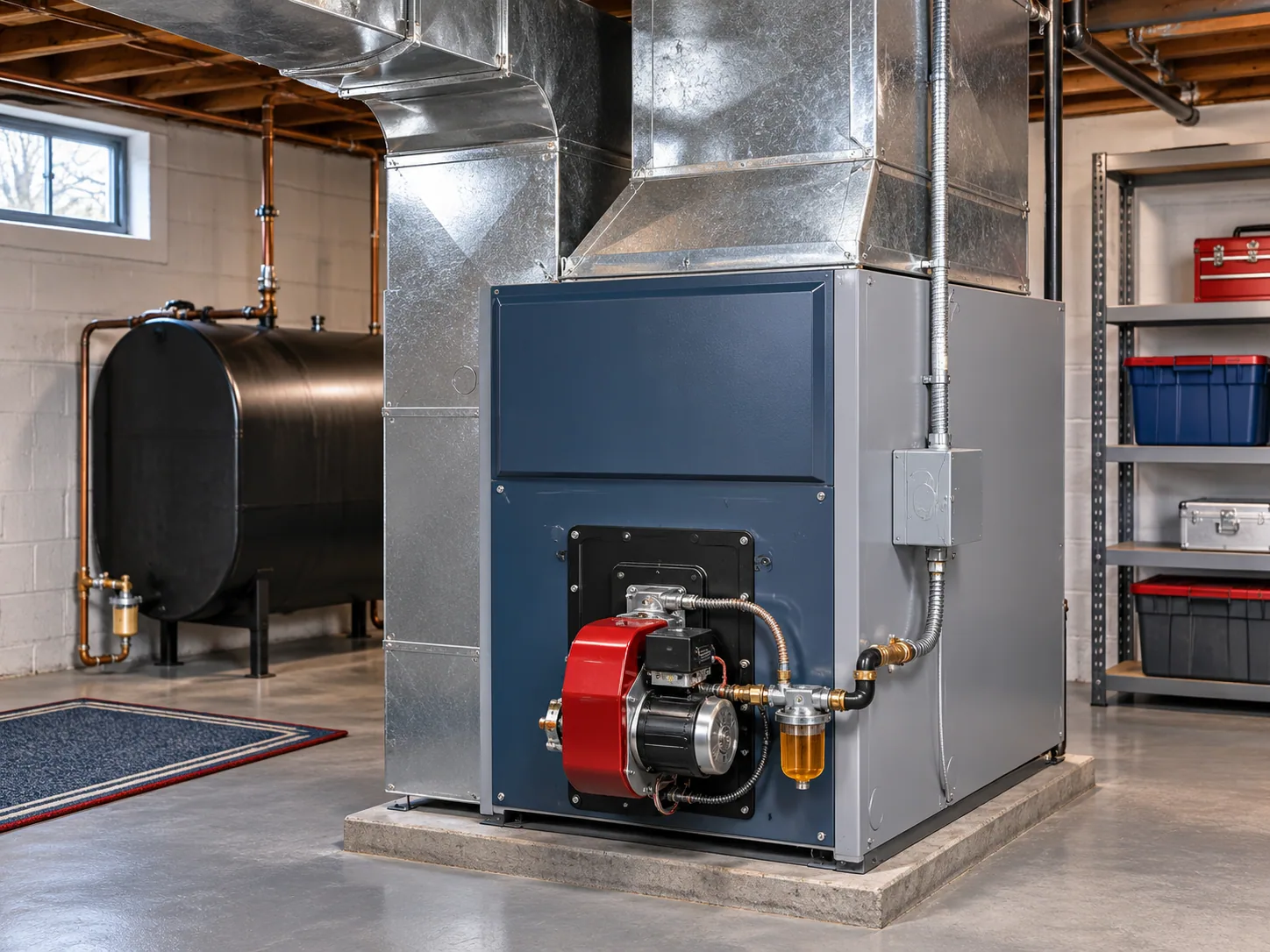
A thorough oil furnace tune-up usually includes a new nozzle and oil filter, a check and adjustment of the ignition electrodes, and cleaning of the combustion chamber and heat exchanger. The technician also checks the flue pipe, the blower and its motor, the air filter and the safety controls, then runs the furnace through full heating cycles to confirm the flame, the blower and the controls work together.
At TPS Heating & Cooling, the owner stays hands-on with every estimate and diagnostic visit. You hear what was found in plain language, along with every reasonable option for repair or replacement and what each one costs. When a repair will keep your furnace running safely, that is what we recommend. Learn more about our oil furnace service, or if the furnace has already stopped, our oil heating repair team answers around the clock.
When Repair Is No Longer the Best Choice
Sometimes the signs add up to a bigger decision. A furnace that needs one costly part after another, has a cracked heat exchanger or simply cannot keep the house warm anymore may be closer to replacement than repair. Age matters too, since newer equipment is generally more efficient than furnaces built decades ago. When replacement makes sense, we explain why and walk through the options, and the decision always stays yours.
Schedule Oil Furnace Service Before the Cold Sets In
If your oil furnace is making new noises, heating unevenly, tripping its reset button or burning through oil faster than last year, do not wait for the coldest night of the season to find out why. TPS Heating & Cooling is a licensed Pennsylvania contractor with 25 years of experience serving Boyertown and the surrounding towns, and we answer 24 hours a day, 7 days a week.
Call (610) 277-7975 or request an estimate to schedule your oil furnace service.